Technical sheet


/ 1DE Buchholz Relay
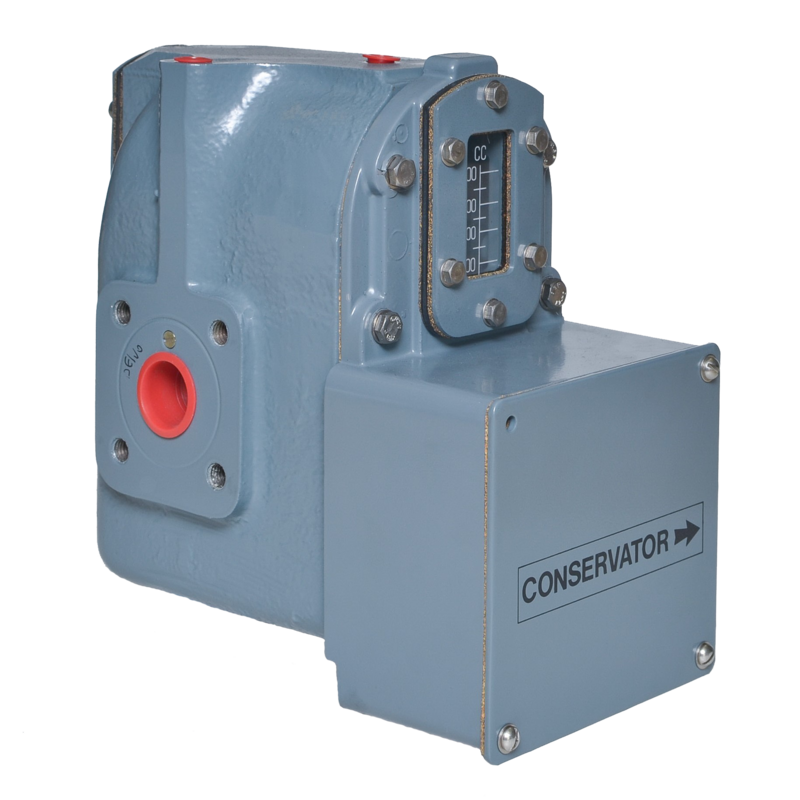
Buchholz Relay
See online technical sheet
/ Use
Buchholz Relays from PENTA Electrical Safety Products can provide a service for many decades if maintained properly. Our Buchholz relay have been providing transformer protection globally for many years.
Most faults in an oil filled transformer are accompanied by the generation of gas. By using a suitable Relay, the formation of gas can be used as a warning of a developing fault. Once a specified volume of gas has collected within the Buchholz Relay, the alarm element will cause an alarm indication.
If there is a more serious fault within the Transformer, the trip element will function. The trip element will cease the functioning of the Transformer to protect it from further damage, and protect those working around it.
Possible Causes for Alarm Indication
○ Broken-down core bolt insulation
○ Shorted Laminations
○ Bad Contacts
○ Overheating of part of the windings
Possible Causes for Trip
○ Earth Faults
○ Winding Short Circuit
○ Puncture of Bushings
○ Short Circuits between Phases
‣ Mounting Position
The relay should be mounted in the connecting pipe between the transformer and the conservator tank. This pipe should be as long and as straight as possible, and must be arranged to slope upwards, towards the conservator at an angle within the limits of 3 to 7 degrees to the horizontal.
There should be a straight run on the transformer side of the relay of at least five times the internal diameter of the pipe, and at least three times this diameter on the conservator side.
A machined surface is provided on the relay bodt for the purpose of testing the mounting of the relay, both in the inclined direction and at the right angles to the pipe, where it should be horizontal.
‣ Connections
The terminal boxes on double element relays are normally drilled and tapped M20x1.5mm for bottom entry by conduit or cable gland. Side entries and alternative thread sizes can be supplied for most types on request. Alarm and tripping circuit connections are made to 0BA terminal stems (M6) in the terminal box, and secured by 0BA nuts and washers. The maximum recommended torqe value (2.8Nm) should not be exceeded when making connections.
‣ Testing on Site
Double element relays are provided with a separate ballvalve to enable the injection of complressed air when testing on-site.
To test the operation of the alarm element, air from an air bottle should be admitted slowly so that the alarm element falls gradually until the switch operates.
To rest the trip element, the valve controlling the bottle is opened quickly so that the air rushes in, depresses the flap, operating the switch. The pressure required is dependent upon the equipment used. To facilitate on-site testing, a portable Dry Air Pump is available.
‣ Routing Testing
Relay are individually calibrated in accordance with BEBS T2 (1966). Values are recorded for loss of oil/gas collection to operate the alarm switch and steady oil flow to operate the trip switch.
The unit is also observed to ensure the trip switch operates due to a complete loss of oil. Assembled relays are pressure tested with transformer oil at 1.4 bar for 6 hours. Electrical circuits are flash tested at 2000 volts r.m.s and the insulation resistance measured at 500 volts is not less than 100 MΩ in air.
Although specifically designed to function with transformer oil according to BS148, successful trials have also been conducted with Silicone coolant.
‣ Trip Operation
When Serious fault occurs, the generation of the gas is so rapid that an oil surge is set up through the relay. this oil flow will impinge upon the flap fitted to the trip element causing it to rotate about its axis and so bring the Mercury switch to the closed position, which in turn operates the tripping devices. In the event of serious oil tripping devices. In the event of serious oil loss from the transformer, both alarm and trip elements operate in turn, in the manner previously described for gas collection.
The oil level in the double-element relay can be monitored against a graduated scale on the windows both sides.
Most faults in an oil filled transformer are accompanied by the generation of gas. By using a suitable Relay, the formation of gas can be used as a warning of a developing fault. Once a specified volume of gas has collected within the Buchholz Relay, the alarm element will cause an alarm indication.
If there is a more serious fault within the Transformer, the trip element will function. The trip element will cease the functioning of the Transformer to protect it from further damage, and protect those working around it.
Possible Causes for Alarm Indication
○ Broken-down core bolt insulation
○ Shorted Laminations
○ Bad Contacts
○ Overheating of part of the windings
Possible Causes for Trip
○ Earth Faults
○ Winding Short Circuit
○ Puncture of Bushings
○ Short Circuits between Phases
‣ Mounting Position
The relay should be mounted in the connecting pipe between the transformer and the conservator tank. This pipe should be as long and as straight as possible, and must be arranged to slope upwards, towards the conservator at an angle within the limits of 3 to 7 degrees to the horizontal.
There should be a straight run on the transformer side of the relay of at least five times the internal diameter of the pipe, and at least three times this diameter on the conservator side.
A machined surface is provided on the relay bodt for the purpose of testing the mounting of the relay, both in the inclined direction and at the right angles to the pipe, where it should be horizontal.
‣ Connections
The terminal boxes on double element relays are normally drilled and tapped M20x1.5mm for bottom entry by conduit or cable gland. Side entries and alternative thread sizes can be supplied for most types on request. Alarm and tripping circuit connections are made to 0BA terminal stems (M6) in the terminal box, and secured by 0BA nuts and washers. The maximum recommended torqe value (2.8Nm) should not be exceeded when making connections.
‣ Testing on Site
Double element relays are provided with a separate ballvalve to enable the injection of complressed air when testing on-site.
To test the operation of the alarm element, air from an air bottle should be admitted slowly so that the alarm element falls gradually until the switch operates.
To rest the trip element, the valve controlling the bottle is opened quickly so that the air rushes in, depresses the flap, operating the switch. The pressure required is dependent upon the equipment used. To facilitate on-site testing, a portable Dry Air Pump is available.
‣ Routing Testing
Relay are individually calibrated in accordance with BEBS T2 (1966). Values are recorded for loss of oil/gas collection to operate the alarm switch and steady oil flow to operate the trip switch.
The unit is also observed to ensure the trip switch operates due to a complete loss of oil. Assembled relays are pressure tested with transformer oil at 1.4 bar for 6 hours. Electrical circuits are flash tested at 2000 volts r.m.s and the insulation resistance measured at 500 volts is not less than 100 MΩ in air.
Although specifically designed to function with transformer oil according to BS148, successful trials have also been conducted with Silicone coolant.
‣ Trip Operation
When Serious fault occurs, the generation of the gas is so rapid that an oil surge is set up through the relay. this oil flow will impinge upon the flap fitted to the trip element causing it to rotate about its axis and so bring the Mercury switch to the closed position, which in turn operates the tripping devices. In the event of serious oil tripping devices. In the event of serious oil loss from the transformer, both alarm and trip elements operate in turn, in the manner previously described for gas collection.
The oil level in the double-element relay can be monitored against a graduated scale on the windows both sides.
/ Areas of activity
 Substation

Technical sheet
/ Technical specifications
 Product specificity
:
Permanent
Product kind
:
Buchholz Relay
Product specificity
:
Permanent
Product kind
:
Buchholz Relay
Technical sheet
/ Dimensions table
| Type | Dims | mm | inch |
|---|---|---|---|
| 1DE | A | 127 | 5 |